Is the 360mm AIO Price Premium Worth It? Decoding Cost vs. Value for Your Next PC Build
Building or upgrading a PC often brings you to a crossroads: how much should you really spend on components? Few decisions spark as much debate as CPU cooling, especially when you start looking at all-in-one (AIO) liquid coolers. Specifically, when does the investment in a 360mm AIO translate into genuine value, and when are you simply paying a premium for diminishing returns? Understanding the true cost vs. value: is the price premium for a 360mm AIO worth it? involves more than just looking at a price tag; it's about matching powerful cooling with your specific CPU, case, and performance goals.
This isn't just about raw thermal numbers. It's about quiet operation, system longevity, aesthetic appeal, and future-proofing your rig. Let's break down whether that larger liquid cooler truly earns its keep in your system.
At a Glance: Key Takeaways for 360mm AIOs
- Elite Cooling Performance: 360mm AIOs generally offer superior cooling capacity, essential for modern flagship CPUs (like Intel i9 or AMD Ryzen 9) pushed to their limits.
- Quieter Operation Potential: With more radiator surface area, fans can spin slower to achieve the same cooling as smaller AIOs, leading to less noise.
- Thermal Demands Are Real: Intel's 13th/14th Gen and AMD's Ryzen 9000 series are thermally demanding, often necessitating more robust cooling solutions.
- Case Compatibility is Crucial: 360mm radiators are large, requiring significant space in your PC case. Always check before buying.
- Value Isn't Just Price: A "premium" 360mm AIO can offer features like LCD screens, better build quality, easier installation, and integrated VRM cooling, which contribute to overall value beyond simple thermal performance.
- Diminishing Returns Exist: For less demanding CPUs or casual use, a smaller AIO or even a high-end air cooler might offer sufficient performance without the added cost and complexity.
The Heartbeat of Your PC: Why Cooling Matters More Than Ever
In the world of high-performance computing, your CPU is the brain, and effective cooling is its life support. Modern processors, especially flagship models, are designed to boost to incredible clock speeds – but only if temperatures allow. Hit a thermal wall, and your CPU will "throttle," slowing down to prevent damage. This means your expensive processor isn't performing at its peak, directly impacting gaming frame rates, rendering times, and overall system responsiveness.
AIO coolers entered the scene as a convenient middle-ground between bulky air coolers and complex custom liquid loops. They offer the potent cooling of liquid without the hassle of building a loop from scratch, traditionally providing lower CPU temperatures and often quieter operation than their air-cooling counterparts. While modern air coolers have made significant strides, AIOs remain a top choice for those chasing high sustained clock speeds on power-hungry CPUs like the Ryzen 9 9590X3D or Intel Core i9-14900K, or simply desiring a quieter machine.
Sizing Up Your Cooling Needs: Why 360mm Catches the Eye
AIOs come in several common sizes, primarily dictated by their radiator length and the number of 120mm fans they accommodate:
- 120mm: One 120mm fan. Often fits in the rear exhaust fan area. Adequate for non-flagship CPUs without overclocking or in extremely compact builds where space is paramount, though high-end air coolers often offer better performance/price at this size. The Enermax LiqMaxFlo SR 120mm, for example, shines in these niche scenarios.
- 240mm: Two 120mm fans. A better starting point for demanding CPUs like Intel's 13th/14th Gen and AMD's Ryzen 9000 lineup, offering improved temperatures and quieter fan operation over 120mm models. The Lian Li Galahad II Trinity Performance 240 is a prime example, often matching or exceeding some 360mm AIOs in performance.
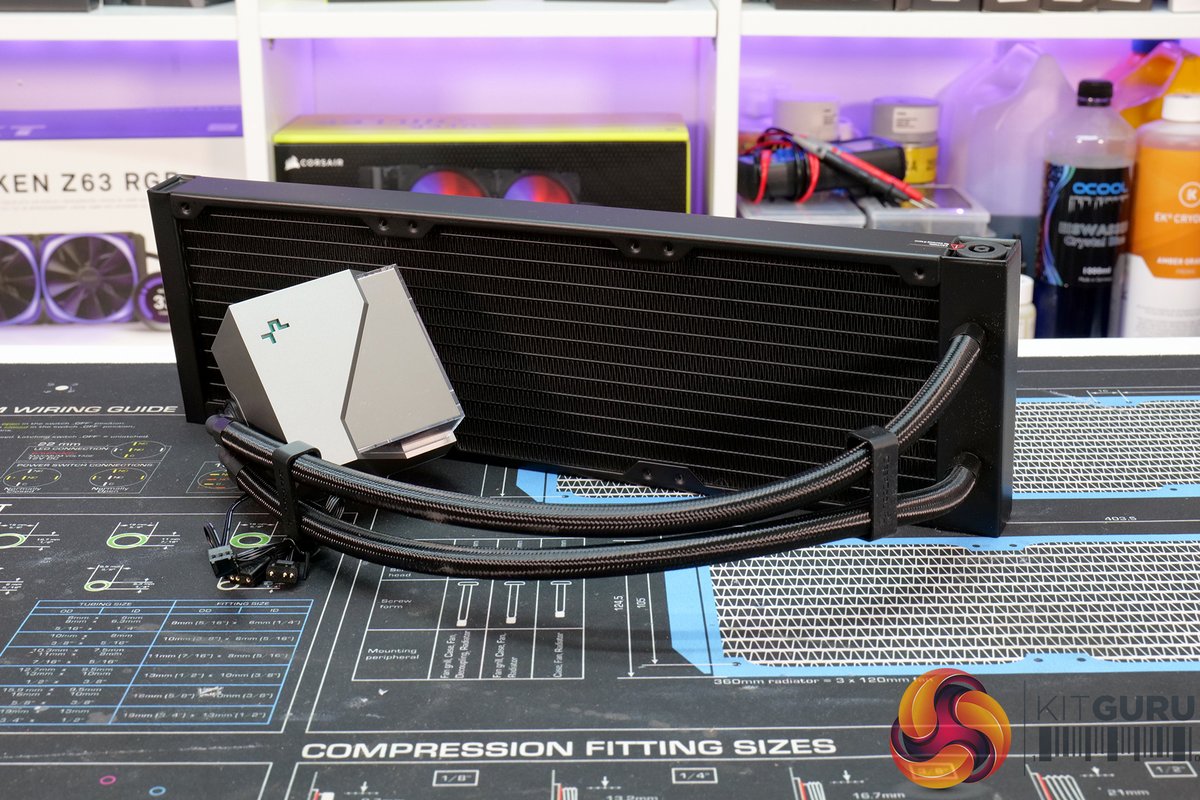
- 360mm: Three 120mm fans. These are the big guns, providing superior cooling potential. They are often quieter than 240mm models because the increased surface area allows fans to spin at lower RPMs.
Less common sizes like 140mm, 280mm, and 420mm exist too, each scaling up the cooling capability. The 280mm AIO, like the Lian Li Galahad II LCD 280, offers a great balance, often outperforming 240mm units while fitting into some cases that can't accommodate a 360mm. The behemoth 420mm AIOs, such as the Corsair iCUE H170i Elite LCD XT, deliver the absolute best cooling performance, albeit with significant size and cost.
The 360mm Advantage: Is Bigger Always Better?
When we talk about the "price premium" for a 360mm AIO, we're fundamentally discussing the additional cost for its larger radiator and three fans. So, what exactly does that extra size buy you?
- Unmatched Thermal Headroom: For the most part, a larger radiator means more surface area to dissipate heat. This translates directly to lower CPU temperatures, especially under sustained, heavy loads. For flagship CPUs like the Intel Core i9-14900K or AMD Ryzen 9 9950X, which can pull over 250-300W under turbo boost, a 360mm AIO isn't just an upgrade; it's often a necessity to prevent throttling.
- Quieter Operation: This is a major, often overlooked benefit. With a larger radiator, your fans don't have to work as hard to maintain target temperatures. They can spin at lower RPMs, drastically reducing noise levels. For a quiet computing experience, this is invaluable.
- Stability for Overclocking: If you're pushing your CPU beyond factory settings, the extra cooling capacity of a 360mm AIO provides the stability needed to maintain higher overclocks without risking thermal shutdown.
- Future-Proofing: While Intel's upcoming Core Ultra Arrow Lake S processors promise more efficiency, CPU thermal demands tend to trend upwards over time. Investing in a robust 360mm AIO now can ensure it adequately cools future processor generations.
However, the 360mm advantage isn't without its caveats. The primary one is case compatibility. A 360mm radiator is a beast, typically requiring top or front mounting in your PC case. Not all cases have the clearance for it, especially if you also have tall RAM heatsinks or a large GPU. Always double-check your case specifications before committing. Even within 360mm coolers, radiator thickness varies. The Arctic Liquid Freezer III Pro, for instance, boasts a thick 63mm radiator and fans, which further restricts compatibility.
Cost vs. Value: Unpacking the 360mm Premium
Now, let's tackle the core question: when is the price premium for a 360mm AIO truly "worth it"? This isn't just about spending more; it's about what you gain for that extra expenditure.
Think of it this way: buying a premium product means you're not just paying for basic functionality, but for enhanced performance, superior features, greater reliability, or a better user experience. For AIOs, this translates into several factors:
- Raw Cooling Performance: The absolute lowest temperatures for heavy workloads.
- Noise-Normalized Performance: How much heat can be dissipated at a specific, quiet noise level.
- Aesthetics: RGB lighting, infinity mirrors, customizable LCD screens, and sleek designs.
- Build Quality & Durability: Higher-quality pumps, denser fin arrays, better fans, and longer warranties.
- Ease of Installation & Ecosystem: Simplified cable management (e.g., Corsair iCUE Link), specific mounting brackets, or pre-applied thermal paste.
- Additional Features: VRM cooling fans, software control, or unique tube routing.
For many users, especially those running top-tier CPUs, the performance gains and reduced noise often justify the extra cost. If you're rendering videos for hours, streaming demanding games, or crunching complex data, every degree saved and every decibel reduced adds up to a more stable, enjoyable, and productive experience.
Yet, there are diminishing returns. For a mid-range CPU like an Intel Core i5 or AMD Ryzen 5, or even a Ryzen 7/Core i7 not subjected to heavy overclocking, a 240mm AIO or a high-end air cooler might provide 90% of the cooling performance at a significantly lower cost. Is 240 vs 360 cooling worthwhile? for your specific setup is a crucial question to ponder.
Beyond Raw Numbers: Factors That Elevate Value
While cooling performance is paramount, a 360mm AIO's value extends into several other critical areas:
Silence is Golden (or at least quieter)
As mentioned, larger radiators mean quieter operation. A well-tuned 360mm AIO can keep even demanding CPUs cool with fans barely audible. This is where coolers like the Silverstone IceMyst 360 really shine, offering excellent noise-normalized results, though its default fans need tuning. The ID-Cooling FX360 INF, despite its budget price, is remarkably quiet under load, peaking at just 44.4 dBA. A silent PC is a joy, whether you're working, gaming, or simply browsing.
The Visual Statement: Aesthetics & Features
Let's be honest, for many, the "worth it" factor includes how a component looks. This is where premium 360mm AIOs truly differentiate themselves.
- LCD Screens: Models like the Thermalright Grand Vision 360 (at a surprisingly low $129) bring customizable LCD screens, typically found in much pricier units. The ASUS ROG Ryujin III and CORSAIR iCUE Link TITAN also boast vibrant LCDs, allowing you to display temps, GIFs, or custom images.
- RGB Lighting & Infinity Mirrors: The ID-Cooling FX360 INF offers RGB fans and an infinity mirror effect, giving a premium look without the premium price tag.
- Clean Design: The Lian Li Hydroshift 360 routes pump tubing through the radiator side for an exceptionally clean look.
- Unique Pump Designs: The MSI MAG CORELIQUID I360 features a dual-chamber pump for improved thermal consistency and a distinct aesthetic. The TRYX Panorama SE 360 is visually striking with its transparent, lighted pump block.
These aesthetic enhancements might not boost your FPS, but they undeniably enhance the visual appeal of your build, making it a showpiece.
VRM Cooling: A Hidden Perk
Some AIOs go beyond just cooling the CPU. The Arctic Liquid Freezer III Pro includes an offset pump block with a built-in 40mm fan specifically for VRM (Voltage Regulator Module) cooling. This is crucial for maintaining stability on high-end motherboards, especially during overclocking, as hot VRMs can lead to performance degradation. The Silverstone IceMyst 360 takes this a step further, allowing users to add multiple fans around the CPU block to direct airflow over VRMs, RAM, and SSDs. Even the modest Enermax LiqMaxFlo SR 120mm integrates a block-mounted fan for VRM/RAM circulation.
Installation Experience & Ecosystem
Some AIOs simplify the build process. The CORSAIR iCUE Link TITAN, for example, uses a magnetic daisy-chaining system that significantly simplifies cable management, reducing clutter and making installation a breeze. This kind of thoughtful engineering adds tangible value to the overall experience. Conversely, the Arctic Liquid Freezer III Pro, while a performance beast, requires an included contact frame for Intel users, adding a layer of complexity to its installation.
Making Your Smart Choice: A Decision Framework
Before you pull the trigger on a 360mm AIO, ask yourself these questions:
- What CPU Am I Cooling? If you have a top-tier CPU (Intel i9, AMD Ryzen 9) that you plan to run at maximum potential or overclock, a 360mm AIO is highly recommended. For mid-range CPUs, consider if how 240mm vs 360mm cooling stacks up in various scenarios truly justifies the extra expense.
- What's My Case Size and Clearance? Seriously, measure twice, buy once. A 360mm AIO needs a lot of space. Ensure your case supports top or front mounting with enough clearance for the radiator and fans, accounting for any RAM or GPU interference.
- How Sensitive Am I to Noise? If quiet operation is a priority, the larger surface area of a 360mm AIO makes it easier to achieve low noise levels while maintaining good temperatures.
- Do Aesthetics Matter to Me? If you want a visually stunning build with RGB, an LCD screen, or a super-clean aesthetic, the premium 360mm options offer significant visual value.
- What's My Budget? While premium 360mm AIOs can exceed $300, there are excellent performance-to-value options under $150, like the Arctic Liquid Freezer III Pro or the Thermalright Grand Vision 360. If you're on a tighter budget, the ID-Cooling FX360 INF or GA II Trinity 360 offer solid performance for around $80–$100.
Top 360mm AIO Picks: Where Performance Meets Value (and Looks!)
Based on extensive testing and real-world performance, here are some standout 360mm AIOs that showcase different aspects of value:
Best Overall 360mm AIO (Performance/Value)
- Arctic Liquid Freezer III Pro (MSRP: $125, often ~$88): This is the undisputed champion for raw cooling performance without breaking the bank. It prioritizes the lowest CPU temperatures above all else (no RGB/screen) and is the go-to for high-end AMD or Intel CPUs. Its thick 63mm radiator and fans may limit case compatibility, and its default settings can be noisy, though easily tuned. The integrated 40mm VRM fan is a big plus. Intel users will need to utilize the included contact frame during installation.
Best 360mm Alternative (Performance/Value with LCD)
- Thermalright Grand Vision 360 ($129): If you want excellent cooling and a customizable LCD screen without splurging, this is your pick. It delivers thermal results that outperform many pricier competitors, making it an incredible value proposition.
Best Budget 360mm AIO
- ID-Cooling FX360 INF (~$80): Proving that budget doesn't mean bad, this cooler offers solid performance, RGB fans, an infinity mirror effect, and a tube of quality thermal paste. It achieves cooling comparable to high-end coolers and is remarkably quiet.
Best Multipurpose AIO
- Silverstone IceMyst 360: This innovative cooler excels in CPU cooling and provides the best noise-normalized results among tested coolers. Its unique design allows for adding multiple fans around the CPU block to direct airflow over VRMs, RAM, and SSDs, making it a comprehensive cooling solution for your entire motherboard.
Premium 360mm AIOs: Aesthetics & Uncompromising Performance
For those who demand the absolute best in both cooling and visual design, these AIOs justify their premium price with top-tier components and features:
- ASUS ROG Ryujin III: Designed for power-hungry CPUs like the i9-14900K, it features Asetek's latest pump, industrial-grade Noctua fans for whisper-quiet operation, and a customizable LCD screen.
- CORSAIR iCUE Link TITAN: The pinnacle of 360mm AIOs, offering peak design, modularity, and raw performance for 300W+ CPUs. Its QX120 fans use magnetic levitation for incredibly quiet operation, and the iCUE Link ecosystem simplifies installation.
- MSI MAG CORELIQUID I360: A stylish cooler that balances form and function with a unique dual-chamber pump for improved thermal consistency and reduced wear. It maintains great temperatures with quiet ARGB operation.
- Lian Li Hydroshift 360: Known for its clean aesthetics with pump tubing routed through the radiator side, it delivers solid performance with low fan noise for demanding CPUs.
- TRYX Panorama SE 360: A visually striking AIO with a transparent, lighted pump block, offering solid performance for CPUs like the Ryzen 9 7900X or Core i7-13700K.
Don't Overlook These Other Great AIOs (Even if not 360mm!)
Sometimes, a 360mm just doesn't fit or isn't necessary. Other sizes offer compelling value:
- Best 420mm AIO: Corsair iCUE H170i Elite LCD XT ($310): The absolute best cooling performance tested, handling over 325W, with a high-quality LCD screen. Requires a massive case.
- Best 280mm AIO: Lian Li Galahad II LCD 280 ($229): Strong performance for modern high-end CPUs in a more compact 280mm size, with a vibrant LCD screen. Non-LCD versions offer great value too.
- Best 240mm AIO (Performance): Lian Li Galahad II Trinity Performance 240 ($119.99): The best-cooling 240mm AIO on the market, performing comparably to some 360mm AIOs while remaining quiet. A fantastic option if considering if 240 vs 360 cooling is the right choice for your build.
- Best 240mm AIO Alternative: Cooler Master MasterLiquid 240 Atmos: An improved flagship with low noise, excellent durability (5-year warranty), and an included ARGB controller.
The Thermal Paste Touch: Don't Forget the Basics
While we're discussing coolers, don't overlook thermal paste. Most coolers include pre-applied paste or a syringe, but for optimal thermal transfer, consider investing in specialized thermal paste. It's a small upgrade that can make a noticeable difference in temperatures, further maximizing the performance of your chosen AIO.
Looking Ahead: Cooler CPUs on the Horizon?
Recent trends suggest that future CPUs might be more power-efficient. Intel Core Ultra Arrow Lake S desktop processors are expected to be more efficient than their Raptor Lake predecessors. This means that while flagship CPUs will always benefit from robust cooling, the absolute extreme cooling performance might become less universally critical for future generations. However, for current high-end processors, especially when overclocked, the demands remain high. A deeper dive into whether 240 vs 360 cooling is truly worthwhile will also need to consider these evolving CPU thermal profiles.
Making Your Decision Count
So, is the price premium for a 360mm AIO worth it? The answer is a resounding yes, for the right user and the right system. If you're running a high-end CPU, pushing it to its limits, prioritizing quiet operation, or simply want your PC to look its absolute best, a 360mm AIO offers tangible benefits that justify the investment.
However, if your CPU isn't a top-tier model, your budget is tight, or your case simply can't accommodate it, don't feel pressured. Excellent 240mm AIOs and even high-end air coolers offer fantastic performance. The key is to match your cooling solution to your specific needs, balancing raw performance with noise, aesthetics, and, of course, your wallet. Choose wisely, and enjoy the benefits of a cool, quiet, and powerful PC.