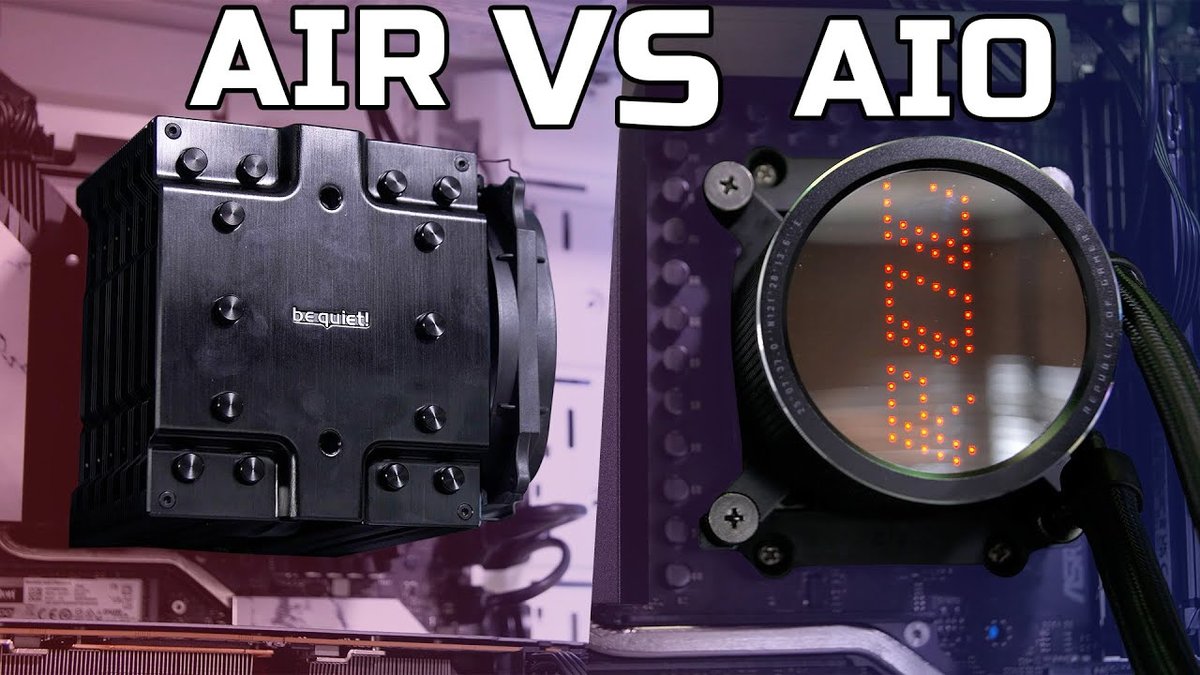
Choosing the right All-in-One (AIO) liquid cooler for your PC build isn't just about aesthetics; it's a critical decision for thermal management, system longevity, and even noise levels. Many builders find themselves at a crossroads, pondering the Optimal Use Cases: When to Select a 240mm AIO vs. a 360mm AIO. It's a question that goes beyond mere size, delving into performance needs, case compatibility, and future-proofing your investment.
As a seasoned builder, I've seen countless discussions and benchmarks, and the truth is, there's no single "best" answer that fits every scenario. Instead, it's about making an informed choice based on your specific components, aspirations, and budget. Let's cut through the noise and figure out which AIO makes the most sense for you.
At a Glance: Key Takeaways
- Case Compatibility First: Always prioritize fitting the largest radiator your PC case can physically accommodate. This is the golden rule.
- Cooling Power: A 360mm AIO offers superior cooling potential due to greater surface area, making it ideal for high-end CPUs, overclocking, and intensive workloads. A 240mm is perfectly sufficient for most mid-range CPUs and casual use.
- Noise Levels: Larger radiators (like 360mm) can often run quieter because their fans don't need to spin as fast to maintain optimal temperatures.
- Space & GPU: Be mindful of front-mounted 360mm radiators, which can restrict space for increasingly large graphics cards. A 240mm might be a smarter trade-off in some compact mid-towers.
- Cost: 240mm AIOs are generally cheaper, but keep an eye out for sales that can bring 360mm units closer in price.
- Installation: Proper pump orientation (lowest point in the loop) is crucial for performance and longevity, regardless of size.
The Foundation: Why Case Compatibility is Your North Star
Before you even think about CPU temperatures or clock speeds, your PC case has the final say. It’s the single biggest determining factor in what size AIO you can install. Think of your case as the blueprint; you can’t build a skyscraper on a bungalow foundation.
This might sound overly simplistic, but countless builders overlook this crucial first step, only to find their shiny new cooler won't fit. You see, AIOs aren't just about the fans; they include a radiator of a specific length and width, plus a pump/cold plate assembly. Each case has designated mounting points (e.g., top, front, rear) with specific size limitations.
For most users, the biggest AIO that physically fits into their case is often the best choice for optimal cooling, assuming their budget allows. This mantra holds true whether you're building a compact powerhouse or a full-tower behemoth.
Let's break down typical case capacities:
- Small Form Factor (Mini-ITX, some Micro-ATX): These compact cases are often restricted to 120mm or 240mm radiators. Space is at an absolute premium here, and even a 240mm might require careful planning, especially regarding RAM clearance or GPU length. A CORSAIR Hydro H60x (120mm) might be the only option for truly cramped builds, though many small-footprint enthusiast cases now support 240mm radiators.
- Mid-Tower Cases: This is where things get interesting. Most modern mid-towers comfortably support 240mm or 280mm radiators, often at the top. However, many contemporary designs, like the CORSAIR 4000D, have expanded to support 360mm radiators, though this usually means a front-mount configuration. This flexibility makes them a popular choice, but careful measurement is still essential.
- Full-Tower Cases: These are the titans of PC enclosures, built for maximum hardware and cooling. Full-tower cases are designed to accommodate 360mm radiators with ease, typically at both the top and front, offering incredible cooling potential. Some even go further, supporting massive 420mm radiators for the ultimate in thermal performance, like the iCUE LINK TITAN 360 RX.
Your Action Item: Before clicking "buy," pull up your case's specifications. Look for "radiator support" and note the maximum sizes for top, front, and rear mounts. This is your non-negotiable starting point.
Matching Cooling Power to Your CPU and Workload
Once you know what fits, the next question is: what do you need? The "optimal use case" for a 240mm vs. a 360mm AIO boils down to your processor and the demands you place on it.
Think of an AIO radiator as a heat exchanger, moving warmth from the liquid inside to the air passing through its fins. A larger radiator simply has more surface area, allowing it to dissipate heat more effectively. This translates directly into lower temperatures or the ability to cool at lower fan speeds (and thus, lower noise).
The Case for a 240mm AIO
A 240mm AIO (which uses two 120mm fans) is a fantastic all-rounder. It strikes an excellent balance between cooling performance, price, and compatibility.
Optimal Use Cases for 240mm:
- Mid-Range CPUs: If you're running a CPU like an Intel Core i5 (current or recent generation) or an AMD Ryzen 5, a 240mm AIO will provide ample cooling headroom, even under sustained load.
- Casual Gaming & Everyday Tasks: For users who primarily game at moderate settings, browse the web, work, or consume media, a 240mm AIO offers excellent thermal control without being overkill.
- Space-Constrained Builds: In Mini-ITX or Micro-ATX cases where every millimeter counts, a 240mm AIO might be your largest viable option, offering superior performance compared to air coolers or 120mm AIOs.
- Value-Oriented Builds: Generally more affordable than their 360mm counterparts, 240mm AIOs allow you to allocate more budget to other components like your GPU or SSD.
- Quiet Operation (with moderate CPUs): For CPUs that don't push extreme heat, a 240mm AIO can maintain quiet operation by running its fans at lower RPMs.
Many builders often wonder if the jump from a 240mm to a 360mm cooler is truly worth the investment and effort for these types of setups, and often, the answer is no – the benefits are marginal for the cost.
The Case for a 360mm AIO
The 360mm AIO (sporting three 120mm fans) is the cooling heavyweight, designed for serious thermal demands.
Optimal Use Cases for 360mm:
- High-End CPUs: If you're rocking a flagship processor like an Intel Core i9 or AMD Ryzen 9, especially the latest generations known for their power draw and heat output, a 360mm AIO is highly recommended. These CPUs thrive with the extra cooling capacity.
- Overclocking Enthusiasts: Pushing your CPU beyond stock speeds generates significantly more heat. A 360mm AIO provides the necessary thermal headroom to maintain stability and extract maximum performance from your overclock.
- Resource-Heavy Workloads: Content creators, video editors, streamers, and engineers running demanding simulations or compiling large codebases will benefit from the sustained cooling performance of a 360mm AIO. It helps prevent thermal throttling during long, intensive tasks.
- Future-Proofing: If you plan to upgrade to a more powerful CPU in the future, investing in a 360mm AIO now can save you from having to replace your cooler down the line. It's an investment in your system's long-term potential.
- Quieter Operation (under heavy load): Because of its larger surface area, a 360mm AIO can dissipate heat more efficiently. This often means its fans can run at slower speeds than a 240mm AIO while providing the same or better cooling for a given CPU load, resulting in a quieter system overall.
When you're weighing your options, the core question often boils down to whether that extra radiator space translates to a tangible benefit for your specific setup. For high-end components and demanding use cases, the answer is a resounding yes.
The Quiet Factor: Noise Levels and Larger Radiators
Nobody wants a PC that sounds like a jet engine. Noise is a significant concern for many users, and this is an area where larger AIOs often shine.
Here's the simple physics: more surface area means more efficient heat dissipation. A 360mm radiator has 50% more surface area than a 240mm radiator. What does this translate to in real-world use?
- Lower Fan Speeds for Same Performance: A 360mm AIO can achieve the same cooling performance as a 240mm AIO while running its fans at significantly lower RPMs. Lower RPMs mean less noise.
- Better Thermal Headroom: When your CPU is under heavy load, a 360mm AIO has more thermal capacity to absorb and dissipate heat, preventing fans from ramping up to their maximum (and loudest) speeds as quickly or frequently.
This means that for the same CPU, a 360mm AIO can be quieter than a 240mm AIO, especially under heavy loads or during gaming. If silence is golden for your build, and your case can accommodate it, a 360mm (or even a 280mm, which often uses larger, slower-spinning 140mm fans) offers a distinct advantage. Ultimately, as we'll explore, answering the question of whether 240mm vs. 360mm cooling is worth it depends heavily on a few critical factors, with acoustics being a major one for many enthusiasts.
Navigating Future Upgrades and GPU Clearance
Building a PC is an investment, and part of that is considering future upgrades. Your choice of AIO can impact your upgrade path, particularly concerning your graphics card.
Future-Proofing Your Cooling
If you're building a system with a mid-range CPU now but anticipate upgrading to a high-end processor (e.g., from a Ryzen 5 to a Ryzen 9) or venturing into serious overclocking down the line, opting for a 280mm or 360mm AIO can save you from having to purchase another cooler later. Modern high-performance CPUs are only getting hotter, and a larger cooler provides a more robust foundation for future powerhouses.
The GPU Clearance Dilemma
This is a critical consideration, especially for mid-tower cases where a 360mm radiator is often front-mounted.
- Front-Mounted Radiators Consume Space: When you mount a radiator and its fans at the front of your case, they push further into the internal chassis space. This reduces the maximum GPU length your case can support.
- Increasingly Large GPUs: Modern high-end graphics cards (think NVIDIA's RTX 40-series or AMD's RX 7000-series) are behemoths, often exceeding 300mm in length, with some pushing 350mm+.
- The Trade-Off: If you front-mount a 360mm AIO in a mid-tower, you might find that your dream GPU no longer fits, or that you're forced into a smaller, less powerful GPU. In such a scenario, a 240mm AIO mounted at the top (if supported) or even a front-mounted 240mm might be a worthwhile trade-off to preserve that valuable GPU space, assuming your CPU doesn't demand extreme cooling.
Always check the maximum GPU clearance listed for your case after accounting for a front-mounted radiator and fans. Don't assume. Measure twice, buy once!
The Cost Equation: Price vs. Performance
Price is almost always a factor in any PC build. Generally speaking:
- 240mm AIOs are typically more affordable than their 360mm counterparts. This makes them an attractive option for budget-conscious builders or those looking to save money to allocate elsewhere.
- 360mm AIOs carry a premium, reflecting the additional material, fans, and manufacturing complexity.
However, it's not always a clear-cut price difference. Discounts and sales can significantly impact pricing. I've seen periods where a 360mm AIO, especially from a less premium brand, can be found for a price very competitive with, or even slightly lower than, a mid-range 240mm from a top-tier brand. Always shop around, compare prices, and factor in current promotions.
Remember, the goal isn't just to buy the cheapest cooler, but the one that offers the best value—performance for your dollar—for your specific needs.
Installation Best Practices: Pump Orientation Matters
Regardless of whether you choose a 240mm or a 360mm AIO, proper installation is key to both performance and the longevity of your cooler. One critical aspect often overlooked is pump orientation.
The Golden Rule for AIO Orientation:
- Mount the AIO with the pump at the lowest point of the loop. This means that the tubes leading from the pump to the radiator should exit the pump and immediately go up to the radiator.
- Why? All AIOs contain a small amount of air. Over time, this air tends to migrate to the highest point in the loop. If the pump (located in the CPU block) is the highest point, or if its inlet/outlet tubes are at the highest point, air can accumulate there. This air pocket can starve the pump of liquid, leading to:
- Reduced Performance: The pump won't be able to circulate coolant efficiently, causing higher CPU temperatures.
- Increased Noise: Air trapped in the pump can create gurgling or grinding noises as the impeller struggles.
- Shortened Lifespan: Constant cavitation (the formation of air bubbles) can wear down the pump over time.
For most setups, a top-mounted radiator naturally positions the pump below the radiator, making it an ideal orientation. If you're front-mounting your radiator, ensure the tubes exit the top of the radiator and curl down, leaving the pump as the physically lowest point in the loop. Avoid mounting the radiator with the tubes at the bottom, unless the radiator itself is below the pump in height (which is rare for a front mount).
Proper installation ensures your AIO performs optimally and serves you well for years to come.
Decision Framework: 240mm vs. 360mm — Who Wins for You?
Let's distill this down into a clear set of decision points.
| Feature | Choose 240mm AIO If... | Choose 360mm AIO If... |
|---|---|---|
| Case Size | You have a Mini-ITX or compact Micro-ATX, or a Mid-Tower with limited radiator mounts. | You have a Mid-Tower with 360mm front/top support, or a Full-Tower. |
| CPU Performance | You have a mid-range CPU (e.g., Core i5, Ryzen 5) and don't plan heavy overclocking. | You have a high-end CPU (e.g., Core i7/i9, Ryzen 7/9) and/or plan significant overclocking. |
| Workload | Casual gaming, everyday productivity, light content creation. | Intense gaming, heavy content creation, streaming, video editing, CPU-intensive tasks. |
| Noise Preference | Good enough cooling/noise for average use, or when cost/space are prioritized. | Prioritize the quietest possible operation under load due to greater thermal headroom. |
| Future Upgrades | Happy with current CPU tier, or minimal CPU upgrade path. | Planning to upgrade to higher-performance CPUs in the future. |
| GPU Size | You need maximum GPU clearance, especially with a front-mounted radiator. | Your case has ample GPU clearance even with a front-mounted 360mm AIO. |
| Budget | You're looking for a more cost-effective cooling solution. | You're willing to invest more for peak performance and acoustics. |
| For a deeper dive into the raw performance numbers, you might also be interested in exploring further if 240 vs 360 cooling is truly worth it for high-end CPUs and specific gaming scenarios. |
Real-World Scenarios: Putting It All Together
Let's look at a couple of common build types to illustrate the choice:
Scenario 1: The Compact Gaming Rig
- Case: Lian Li O11 Air Mini (supports up to 280mm top, 360mm front)
- CPU: AMD Ryzen 7 7700X
- GPU: NVIDIA RTX 4070
- Usage: 1440p gaming, light streaming, productivity.
- Consideration: Wants good cooling but values aesthetic, and GPU length is a concern with a front 360mm.
Recommendation: A 240mm or 280mm AIO top-mounted. The Ryzen 7 7700X runs warm but is manageable with a quality 240mm or 280mm. A top mount keeps the front clear for better GPU compatibility and case airflow. The performance difference with a 360mm might be negligible for this CPU/GPU combo in gaming, and the space saved for the GPU or front intake fans could be more valuable.
Scenario 2: The Overclocked Workstation & Gaming Beast
- Case: Phanteks Enthoo Pro 2 (supports 360mm or 420mm top, 360mm/420mm front)
- CPU: Intel Core i9-14900K
- GPU: NVIDIA RTX 4090
- Usage: 4K gaming, heavy video editing, complex rendering, CPU overclocking.
- Consideration: Max performance is paramount, heat is a major factor, and noise reduction under load is desired.
Recommendation: A 360mm AIO (or even 420mm if budget and specific compatibility allow) top-mounted. The i9-14900K is a power-hungry beast, especially when overclocked. A 360mm AIO provides the critical surface area to manage its heat effectively, preventing throttling and allowing for sustained boost clocks. The larger radiator also means fans can spin slower, resulting in a quieter system during intense tasks.
Your Ultimate AIO Decision Checklist
Before you commit to a purchase, run through these final questions:
- Case Compatibility: Have you double-checked your PC case's specific radiator support (top, front, rear) against the dimensions of the AIO you're considering? This is non-negotiable.
- CPU & Workload: Is your CPU a mid-range model primarily used for general tasks, or a high-end chip destined for overclocking and heavy loads?
- GPU Clearance: If considering a front-mounted AIO, have you verified that your chosen GPU (or future GPU) will still fit comfortably?
- Noise Tolerance: Is silent operation under load a high priority for you?
- Budget: Does the price fit within your overall build budget, accounting for sales and discounts?
- Aesthetics & Brand Ecosystem: Does the AIO aesthetically match your build vision, and does it integrate well with any existing RGB or fan control software (e.g., CORSAIR iCUE LINK)?
So, when the dust settles, the decision on whether 240 vs 360 cooling is worth it isn't just about raw power, but about intelligent system design. For most users, remember the core actionable insight: the biggest AIO that physically fits into your PC case and aligns with your cooling needs and budget is usually the optimal choice. Do your research, measure twice, and build with confidence!