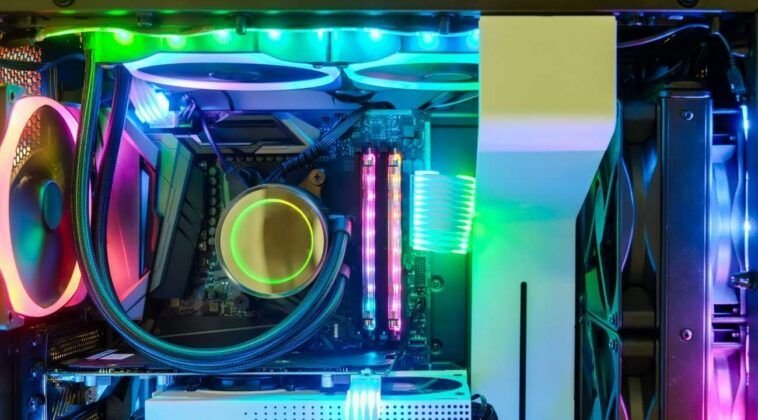
Let's talk brass tacks about keeping your CPU cool. You're building or upgrading a rig, staring down a sea of options, and inevitably you land on the great liquid cooling debate: just how much radiator do you really need? This isn't just about raw power; it's about smart choices, thermal headroom, and finding that sweet spot for your build. Today, we're diving deep into the Performance Benchmarks: 240mm vs 360mm Radiator Cooling Efficiency, cutting through the marketing hype to give you the clear answers you need.
At a Glance: What You Need to Know
- Size Matters (Mostly): Generally, larger radiators (like 360mm) offer better cooling performance than smaller ones (like 240mm) due to increased surface area.
- CPU Dictates Needs: Your processor is the primary factor. A 240mm is often perfect for mid-range to upper-mid-range CPUs, while a 360mm is best for high-end Core i7/Ryzen 7 and all Core i9/Ryzen 9 chips.
- 140mm Series Advantage: Radiators based on 140mm fans (e.g., 280mm, 420mm) often have a slight edge over their 120mm counterparts due to larger fan size and heatsink mass, running quieter for similar performance.
- Compatibility is King: Don't buy a radiator that won't fit your case. Front-mounted 360mm AIOs can conflict with long GPUs.
- Diminishing Returns: While performance increases with size, the price jump can outpace the performance gain, especially as you go beyond 360mm.
- Quiet Operation: Larger radiators typically allow fans to run at lower RPMs, resulting in a quieter system.
The Radiator Reality Check: What's the Big Deal About Size?
At its heart, an All-in-One (AIO) liquid cooler is designed to pull heat away from your CPU more efficiently than traditional air coolers. It does this by circulating coolant through a cold plate on your CPU, then through a radiator where heat dissipates into the air, helped along by fans. The radiator’s job is simple: provide as much surface area as possible for that heat exchange.
Radiator size isn't arbitrary; it's determined by the fans it accommodates. A 120mm radiator holds one 120mm fan, a 240mm holds two 120mm fans, and a 360mm holds three 120mm fans. Similarly, you'll find 140mm, 280mm (two 140mm fans), and 420mm (three 140mm fans) options.
The general wisdom holds true: a larger radiator usually means more cooling potential. More surface area allows for more heat to be transferred away from the coolant and into your case's airflow, leading to lower CPU temperatures. But, as with most things in PC building, "more" isn't always "better" for your specific needs.
The 240mm Workhorse: Capable, Compact, and Often Underestimated
Think of the 240mm AIO as the versatile midfielder of the cooling world. It’s an incredibly popular choice, and for good reason. These coolers are designed to house two 120mm fans side-by-side, offering a substantial upgrade over single-fan (120mm) units without demanding excessive case real estate.
Who is the 240mm AIO For?
A 240mm radiator is an excellent choice for a wide range of CPUs. You'll find it perfectly capable of handling:
- Most high-end Core i5 and Ryzen 5 chips: Processors like the Ryzen 5 7600X or Core i5-14600K will purr happily under a well-performing 240mm AIO, even with a bit of overclocking.
- Low-power Ryzen 7 and Core i7 variants: If you're running chips like the Core i7-13700 or Ryzen 7 7700 (non-X/non-K models), a 240mm AIO can maintain very respectable temperatures, especially if you're not pushing them to their absolute limits with heavy, sustained loads.
The Perks of a 240mm AIO
- Better Price-to-Performance: Generally, 240mm AIOs offer a fantastic balance of cooling performance and cost. The jump from an air cooler to a 240mm AIO often provides a significant thermal improvement for a reasonable investment.
- Wider Case Compatibility: Many mid-tower cases, even older ones, can accommodate a 240mm radiator, often mounted at the top or front. This flexibility makes it a go-to for builders who aren't using the absolute largest cases.
- Less GPU Interference: If you have a particularly long graphics card, a front-mounted 360mm radiator can sometimes create a tight squeeze or even block installation. A 240mm AIO is less likely to cause such headaches, preserving precious space for your GPU.
When the 240mm Might Fall Short
While excellent, a 240mm AIO does have its limits. For the most demanding, power-hungry CPUs, especially when heavily overclocked, it might struggle to keep temperatures consistently low under sustained stress tests or rendering tasks. This can lead to thermal throttling, where your CPU automatically reduces its clock speed to prevent overheating, directly impacting your system's performance.
The 360mm Powerhouse: Unleashing Peak Thermal Performance
Stepping up to the 360mm AIO means you're serious about cooling. This size accommodates three 120mm fans, effectively giving you 50% more cooling surface area than a 240mm unit. This extra space translates directly into superior heat dissipation, making it the top choice for enthusiasts and professionals.
Who is the 360mm AIO For?
The 360mm radiator is designed to tame the most potent desktop processors on the market:
- High-end Ryzen 7, Core i7, Ryzen 9, or Core i9 processors: If you're running beasts like the Core i9-13900K, Ryzen 9 7950X, or similar, a 360mm AIO is strongly recommended. These CPUs generate significant heat, and a 360mm radiator provides the necessary thermal headroom to let them run at their full potential.
- Overclocking Enthusiasts: If you plan to push your high-end CPU beyond its stock speeds, a 360mm AIO offers the extra cooling capacity to maintain stability and prevent thermal throttling during intense overclocking sessions.
- Workstations and Content Creation Rigs: For tasks that heavily load the CPU for extended periods (e.g., video editing, 3D rendering, scientific simulations), a 360mm AIO ensures consistent performance and longevity. In architectures like AMD's Zen 4, better cooling often directly translates to better boost clocks and sustained performance.
The Undeniable Advantages of a 360mm AIO
- Superior Cooling Performance: This is the primary draw. The increased surface area simply allows for more efficient heat transfer, leading to lower CPU temperatures across the board compared to smaller AIOs.
- Quieter Operation: With more cooling capacity, the fans don't have to spin as fast to maintain desired temperatures. This means a 360mm AIO can often run significantly quieter than a 240mm unit while delivering similar or better temperatures.
- Maximum Thermal Headroom: For CPUs that aggressively boost their clocks based on thermal availability, a 360mm AIO gives your processor more room to stretch its legs, potentially leading to higher sustained performance.
The Trade-offs to Consider
- Higher Price: More hardware means a higher cost. 360mm AIOs are noticeably more expensive than their 240mm counterparts.
- Case Compatibility Challenges: While many modern mid-tower and full-tower cases support 360mm radiators, installation can be tighter. You might be limited to a front mount, which can potentially interfere with large graphics cards, or a top mount, which might conflict with tall RAM modules or motherboard heatsinks.
- Bulkier Design: The larger size simply takes up more space inside your case, which might affect overall aesthetics or airflow for other components if not managed well.
Beyond the Basics: 240mm vs. 360mm Performance Benchmarks Explained
When we talk about performance benchmarks, we're not just looking at a single number. We're considering a few key metrics:
- Idle Temperatures: How cool the CPU stays when doing nothing. Most AIOs perform well here, but larger ones might offer slightly lower temps.
- Load Temperatures (Gaming/Productivity): Temperatures under typical daily use. A 240mm will often be sufficient for most CPUs.
- Stress Test Temperatures (Heavy Load): This is where the real differences emerge. Running demanding synthetic benchmarks (like Prime95 or Cinebench R23) pushes CPUs to their thermal limits.
Under heavy, sustained loads, a 360mm radiator will almost always outperform a 240mm radiator on the same CPU by a noticeable margin—often 5-10°C or more, depending on the specific CPU, ambient temperature, and cooler model. This difference can be crucial for high-end chips that generate a lot of heat.
Consider a chip like the Core i9-13900KS. This CPU can pull over 300W under load. A 240mm AIO would likely struggle to keep it below throttling temperatures, forcing it to downclock. A 360mm AIO, however, provides the necessary cooling capacity to keep such a chip operating in its optimal performance window, allowing it to maintain higher boost frequencies for longer.
The question then becomes, Is 240 vs 360 cooling worth it? The answer hinges entirely on your CPU and usage. If you're running a Core i5-14600K primarily for gaming, a 240mm AIO is probably sufficient, and the extra cost and potential compatibility issues of a 360mm might not be "worth it" for the marginal gains. However, for a Core i9 editing 4K video, the 360mm is an investment in sustained performance and stability.
The 140mm Series: The Unsung Heroes (280mm vs. 360mm & 420mm)
While 120mm-based radiators (240mm, 360mm) are common, don't overlook their 140mm counterparts (140mm, 280mm, 420mm). These often offer a subtle but significant advantage.
- Larger Fans, More Airflow, Less Noise: 140mm fans move more air per revolution than 120mm fans. This means they can achieve similar or better airflow at lower RPMs, resulting in a quieter cooling solution.
- Greater Heatsink Mass: Radiators designed for 140mm fans naturally have a slightly larger heatsink mass, contributing to better heat dissipation.
The 280mm vs. 360mm Debate
This is a common point of contention. A 280mm AIO (two 140mm fans) often performs very similarly to, and sometimes even slightly better than, a 360mm AIO (three 120mm fans), especially in terms of noise-to-performance ratio.
- 280mm Pros: Quieter operation, potentially better cooling than 240mm, often fits in cases that can't take a 360mm.
- 280mm Cons: Case compatibility can still be an issue (some cases support 360mm but not 280mm, or vice-versa, due to mounting hole differences), fewer models available than 360mm.
For extremely hot CPUs, a 420mm radiator (three 140mm fans) is the absolute pinnacle of AIO cooling. It's strictly for the highest-end chips and very specific, large cases, offering unparalleled thermal performance.
Matching Your Radiator to Your CPU: A Practical Guide
Choosing the right AIO isn't just about raw size; it's about matching the cooler to your CPU's thermal design power (TDP) and your usage patterns.
CPU Tiers and Recommended Radiator Sizes
- Entry to Mid-Range Chips (e.g., Ryzen 5 7600, Core i5-13400):
- Recommendation: A good air cooler or a 120mm/240mm AIO.
- Note: 120mm AIOs are often criticized for limited performance, sometimes performing similarly to single-tower air coolers while being more expensive and less robust. Generally, a high-quality air cooler is a better value here.
- High-End Core i5 and Ryzen 5, Low-Power Ryzen 7/Core i7 (e.g., Ryzen 5 7600X, Core i5-14600K, Core i7-13700, Ryzen 7 7700):
- Recommendation: 240mm/280mm AIO.
- These CPUs hit a sweet spot where a 240mm or 280mm AIO provides excellent cooling performance without being overkill or straining your budget.
- High-End Ryzen 7, Core i7, Ryzen 9, or Core i9 Processors (e.g., Ryzen 7 7800X3D, Core i7-14700K, Ryzen 9 7900X, Core i9-13900K):
- Recommendation: 360mm AIO.
- This is where the 360mm truly shines. It provides the necessary cooling for these power-hungry chips, especially if you plan on any overclocking or sustained heavy loads.
- The Highest-End Chips on the Market (e.g., Core i9-13900KS, Ryzen 9 7950X, Threadripper):
- Recommendation: 420mm AIO (if your case supports it).
- For the absolute pinnacle of CPU performance and heat generation, a 420mm AIO offers the most robust cooling solution available.
Overclocking Considerations
If you plan to overclock your CPU, you're essentially asking it to generate more heat. In this scenario, it's always wise to opt for more cooling capacity than you think you need. A CPU that stays cooler under load will often allow for higher stable overclocks and better sustained performance.
Case Compatibility: The Unyielding Gatekeeper
This is arguably the most critical factor after your CPU's cooling demands. You can have the best 360mm AIO in the world, but if it doesn't fit your case, it's just an expensive paperweight.
Key Compatibility Checks:
- Radiator Size and Mounting Points: Check your PC case specifications for supported radiator sizes and mounting locations (top, front, bottom, rear).
- Most modern mid-tower and full-tower cases support 360mm radiators.
- Many smaller mid-towers might be limited to 240mm or 280mm at the top.
- Mounting Position:
- Top Mount: Often preferred for optimal cooling performance (hot air rises) and GPU clearance. However, it can conflict with tall RAM heatspreaders or motherboard VRM heatsinks.
- Front Mount: Common for larger radiators. Be mindful of GPU length. A front-mounted 360mm radiator can consume significant space, potentially making it impossible to install a long GPU. In such cases, a 240mm AIO might be a worthwhile trade-off for less demanding CPUs to preserve GPU space.
- Bottom/Rear Mount: Less common for larger AIOs, typically only for smaller (120mm/140mm) units.
- Pump/Block Clearance: Ensure the CPU block isn't too tall for your side panel, though this is rarely an issue with modern AIOs.
The best advice remains: choose the biggest AIO that fits your case. If your case can comfortably fit a 360mm, and your CPU warrants it, go for it. If it's a tight squeeze or compromises other components, a 240mm or 280mm might be the smarter, more practical choice.
The Noise Factor: Silence is Golden (or at Least Quieter)
Beyond raw thermal performance, noise levels are a significant consideration for many users. This is another area where larger radiators often shine.
A larger radiator's increased surface area means it can dissipate heat more effectively. This directly translates to the fans not needing to spin as fast to achieve the same cooling performance as a smaller radiator.
- 360mm vs. 240mm for the same CPU at the same temperature: The 360mm AIO's fans will likely be running at a lower RPM, producing less audible noise.
- Under heavy load: While both might ramp up, the 360mm will generally reach a lower peak fan speed, or achieve better temperatures at the same fan speed, giving you a quieter, more pleasant computing experience.
If a quiet PC is a high priority, a larger radiator is a fantastic investment, assuming your budget and case allow for it.
The Price Tag: Budget vs. Performance ROI
The cost difference between AIO sizes is not insignificant.
- 120mm AIOs: Often similar in price to high-end air coolers but offer questionable performance advantages.
- 240mm AIOs: A solid value proposition, offering a good balance of performance and price.
- 360mm AIOs: A noticeable jump in price, reflecting the additional materials and manufacturing complexity.
- 420mm AIOs: Command a premium price, targeting the niche market of extreme performance.
While the performance gains are real as you go up in size, there are diminishing returns. The percentage increase in cooling performance from a 240mm to a 360mm AIO isn't always proportional to the percentage increase in price. For a mid-range CPU, investing in a 360mm AIO might offer only a few degrees better cooling for a significantly higher cost, which could be better spent elsewhere in your build (e.g., a better GPU or more storage).
However, for those high-end CPUs that truly demand the best cooling to avoid throttling, the extra investment in a 360mm or 420mm AIO becomes a critical component in unlocking the chip's full potential, making the "return on investment" more about sustained performance than just raw temperature numbers.
Making Your Choice: The Smart Buyer's Checklist
So, how do you decide between a 240mm and 360mm (or even a 280mm/420mm) AIO? Here’s a quick checklist to guide your decision:
- What CPU are you cooling?
- Ryzen 5/Core i5 (high-end): 240mm/280mm is likely perfect.
- Ryzen 7/Core i7 (high-end): 360mm is recommended for optimal performance.
- Ryzen 9/Core i9: 360mm is essential; 420mm if you want the absolute best.
- What's your case's radiator support?
- Physically measure and check your case's specs. Don't assume.
- Consider mounting positions (top vs. front) and potential GPU interference.
- What's your budget?
- Factor in the cost difference and whether the performance gains align with your spending priorities.
- Do you plan to overclock?
- If yes, lean towards more cooling capacity (360mm or 420mm for high-end chips).
- How important is quiet operation to you?
- Larger radiators generally mean quieter systems.
Final Word: Cooling Smart, Not Just Hard
Choosing the right AIO liquid cooler is a balancing act. It's not just about picking the biggest radiator you can find; it's about making an informed decision that harmonizes with your CPU's demands, your case's limitations, your budget, and your personal preferences for noise and aesthetics.
For most builders with mid-to-high-end CPUs, a 240mm or 280mm AIO offers an excellent blend of performance, value, and compatibility. But for those pushing the absolute limits with the hottest chips on the market, or simply seeking the quietest possible operation with top-tier performance, a 360mm or even 420mm radiator is the clear path forward.
Ultimately, the goal is to provide stable, efficient cooling that allows your CPU to perform at its best, without creating bottlenecks or breaking the bank. Happy building!